

Advertisement
Students who actively study tend to remember things up to 50% longer than those just rereading notes. Studies show this.
When we compare study with deep learning, usually we think of cramming facts for a quiz. This is basic studying: you just review quickly, hoping to remember for the test. Deep learning, however, is about really understanding ideas, mastering them for good, and applying them in new ways.
Better grades don’t always mean you’re ready for a career or have skills that last. Difference signs include how well you retain info, your problem-solving speed, and if you need to relearn stuff. Research, especially using Bloom’s Taxonomy and findings from the National Center for Education Statistics, shows active learning beats just reviewing.
In this article, we’ll look at what separates deep learning from studying, ways to learn well, and a plan that involves engaging actively, changing your mindset, understanding your own learning, and using tech and AI. By the end, you’ll think about your learning habits and make a goal to shift from mere studying to truly learning.
Understanding the Concepts of Studying and Learning
Before you choose a method, understand studying is not the same as learning. Studying is about quick wins like rereading notes or cramming. It puts information in your short-term memory. This is different from truly knowing the material.
Deep learning is about connecting new ideas to what you already know. It helps you use knowledge in new ways. Strategies for deep learning include things like spaced repetition and retrieval practice.
When comparing deep learning and studying, it’s all about approach. Passive studying helps you remember fast but only for a short time. Deep learning, though harder at first, helps you truly understand and apply knowledge.
Learning styles like visual, auditory, or kinesthetic are popular topics. But, matching teaching exactly to a style doesn’t always work best. Instead, mix deep learning with what you enjoy to stay engaged. Use diagrams if you’re visual, talk through concepts if auditory, or do activities if kinesthetic.
The best plan is to use proven study methods and adjust them to what you like. Use retrieval practice, spaced repetition, and elaboration for deep understanding. This mix gives you the most effective learning.
| Approach | Typical Behaviors | What it Builds | Suggested Techniques |
|---|---|---|---|
| Passive Studying | Rereading, highlighting, passive review | Short-term recognition, quick recall for tests | Limit rereading; add self-testing and summaries |
| Active Deep Learning | Retrieval practice, spaced review, elaboration | Long-term retention, transfer, problem solving | Spaced repetition, practice tests, concept maps |
| Preference-Based Adaptation | Using visual, auditory, kinesthetic formats | Higher engagement, better application of techniques | Diagrams for visual, recordings for auditory, labs for kinesthetic |
The Importance of Active Engagement
Active engagement helps turn study time into lasting knowledge. When you actively engage, you make memories stronger. This process helps you understand things deeply, making your study time more effective.
Science tells us that recalling information makes our memories stronger. Desirable difficulties, a term by Robert Bjork, mean that harder tasks lead to better memory. By linking new info to what we already know, we create stronger connections in our brain.
Studies in classrooms show that students who practice retrieval and space out their studying do better. They remember more and can apply what they’ve learned better than those who just read. Classes that involve active participation and problem-solving lead to better learning than just listening to lectures.
How Active Learning Enhances Retention
Using retrieval practice means pulling info from memory instead of just reading it again. Tools like Anki help show that spacing out your studying over time helps you remember more.
Regular quizzes and practice tests make learning stick by forcing you to find answers again. This challenge makes learning last longer. Explaining ideas out loud helps turn facts into concepts you can use in new ways.
Techniques for Engaging with Content
Create a set of strategies that work best for you. Start with spacing out your study times and mix different types of problems. This approach helps you apply what you learn more flexibly.
- Retrieval practice: practice tests, Anki, Quizlet, and planned recall sessions without the book.
- Spaced repetition: using specific timing for reviews to remember more, longer.
- Elaboration and self-explanation: explaining in your own words, and asking “why” and “how”.
- Interleaving: mixing up problem types instead of doing many of the same kind.
- Dual coding: using clear words alongside diagrams and charts.
- Active note-taking: using different note-taking strategies to make retrieval easier.
Set up a weekly study plan with short, active sessions and checks on what you recall. Include a five-minute reflection at the end. This plan will help you learn effectively, balancing study and deep learning for success.
The Role of Deep Learning in Education
There are two important ways deep learning affects your studies. One is about how we deeply understand topics. The other deals with computer systems that learn from data. Both are key in shaping learning methods and how schools teach in the United States.
Algorithms and Models in Education
Deep learning strategies can be about thought processes or smart AI systems. It’s good to know both meanings to use them right.
Platforms like DreamBox and Knewton use algorithms to track how you’re doing. They figure out what you need to learn next and make sure it’s just right for you. Cognitive tutors help by giving hints and feedback on your work.
These tools do more than just give out tasks. They help you study smarter, using techniques like spacing out learning. This helps you get a deep understanding while keeping track of your improvement.
Benefits of Incorporating AI in Learning
AI helps learning in big ways, whether in classrooms or online. It customizes learning so time is spent well on what you need. This means you don’t waste time on things you already know.
Getting quick feedback helps you fix mistakes fast. Systems like Coursera and Khan Academy give good tips that help you remember better. These platforms reach lots of people, offering great practice opportunities.
Teachers get helpful info from data to make lessons better. They learn what confuses students and can fix it. However, protecting students’ privacy and being fair with AI use is crucial. Teachers must still guide the learning process.
Using AI tools well means mixing them with serious studying. Use tech to plan out review times, get a variety of questions, and track your progress. Pair these tools with focused study to truly learn and remember.
| Feature | How It Helps You | Representative Tools |
|---|---|---|
| Personalized pacing | Matches lesson speed to your mastery for efficient study | Knewton, DreamBox |
| Immediate corrective feedback | Reduces repeated mistakes and boosts retention | Cognitive tutors, intelligent tutoring systems |
| Scalable practice | Delivers repeated, spaced practice to many learners | Coursera, Khan Academy, Duolingo |
| Learning analytics | Shows misconceptions and guides curriculum changes | Learning management systems, teacher dashboards |
| Support for study habits | Suggests deep learning strategies while tracking effort | Adaptive platforms, study-planning apps |
Why Passive Studying Can be Ineffective
Passive studying feels like it’s working. You’re sitting down, going over notes, and highlighting away. But this method has big drawbacks you need to know. Understanding these can help you choose how to study better.
The Pitfalls of Cramming for Exams
Cramming makes you familiar with material quickly, but that doesn’t last. Hermann Ebbinghaus, a psychologist, showed us how fast we forget things after studying like this. Your brain doesn’t truly hold onto the facts, so you’re likely to forget them soon.
Studying at the last minute might bump up your scores for a bit. But research from places like Stanford shows this doesn’t help with bigger, more complex tests. You might remember facts, but solving real problems? That gets tough.
Cramming affects your sleep and makes you stressed, too. Bad sleep messes with how your brain keeps memories. And too much stress decreases how well you learn. Both of these can hurt your performance later on.
Understanding Information vs. Knowledge
Information is just bits and pieces—like dates and definitions. Knowledge is when you tie those bits together in ways you can use. Knowing a treaty date is one thing; understanding its impact is another, deeper, level.
Metacognitive skills let you see the difference. Ask yourself if you can explain something, not just repeat it. Questions like “Can I teach this?” help you avoid just cramming. This approach leads to real learning.
Shift how you set study goals. Instead of just getting through chapters, aim to understand and use the concepts. Doing projects, solving problems, and teaching others can really prove you know your stuff. This way, you aim for deep understanding, not just memorizing.
Here’s a quick look at different study methods and their impacts. Check this out to pick the best way to study.
| Study Technique | Retention | Transfer to Novel Problems | Stress & Sleep Impact | Time Investment |
|---|---|---|---|---|
| Massed practice (cramming) | Low after a few days | Poor | High stress, reduced sleep | Short, intense |
| Spaced retrieval practice | High over weeks | Good | Lower stress with proper schedule | Moderate, regular |
| Interleaved practice | Moderate to high | Very good for transfer | Manageable | Moderate |
| Elaborative interrogation | High when applied | High, encourages application | Low to moderate | Moderate |
| Passive rereading/highlighting | Low to moderate | Poor | Variable | Low |
Creating a Growth Mindset
Changing your approach to learning starts with shifting your beliefs. Carol Dweck discovered the difference between a fixed and a growth mindset. Students who embrace growth mindset find it easier to bounce back, try harder after failing, and embrace difficult tasks that help with deep learning.
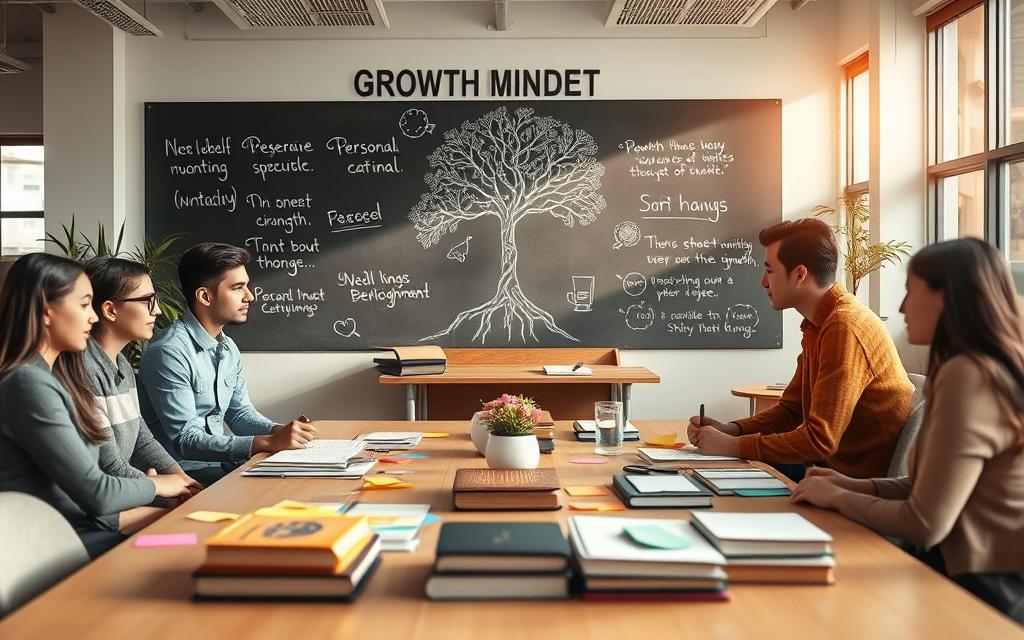
Embracing a growth mindset means you think about effort in a new way. You’ll see mistakes as clues for how to improve, not as your limits. This way, you’re encouraged to practice more and improve your memory, both of which are key to deep learning.
Trying out simple growth mindset strategies is easy. Start by seeing failure as a form of feedback. Keep a short journal to reflect on your studies. Write down one mistake, why you made it, and one new strategy for next time. This turns mistakes into steps toward learning and progress.
Instead of just focusing on grades, set goals that are about the process. For example, you could decide to do spaced retrieval practice for thirty minutes, three times a week. This approach supports effective learning by focusing on techniques and ongoing improvement.
When giving praise, focus on the effort and methods used. You could say, “Your setup was better this time,” or “Your steps are clearer now.” This kind of feedback encourages deep learning and motivates continued effort.
Start with small, achievable tasks to grow your confidence. Take on a challenge just a bit harder than what you’re used to or try timing your practice sessions. Celebrating these victories, no matter how small, fosters persistence and lowers fear of failing. You’ll find yourself more motivated and able to apply your skills better over time.
There are many tools out there to help you develop a growth mindset. Read summaries of Carol Dweck’s research, try online courses about thinking about your own thinking (metacognition), or use services your school offers like coaching or counseling. These resources can teach you how to learn better and apply growth mindset methods to your study habits.
| Action | What to Do | Expected Benefit |
|---|---|---|
| Reflective journaling | Write one error and one strategy after each study session | Improved strategy selection and error awareness |
| Process goals | Set mastery-focused targets like spaced retrieval practice | Consistent progress and clearer habit formation |
| Deliberate practice | Work on weak areas with feedback loops | Faster skill gains and deeper understanding |
| Strategy-focused praise | Comment on effort and method, not innate talent | Motivation to use effective techniques |
| Small challenges | Choose tasks just beyond current skill level | Builds confidence and persistence |
| Use campus resources | Consult academic coaches, counseling, or metacognition courses | Targeted support and improved study plans |
How to Evaluate Your Learning Methods
First, look at how you currently study. Write down the tasks, time spent, and outcomes. It’s essential to compare your methods with actual results, not just feelings.
Reflective Practice for Self-Assessment
Start with a clear goal, practice purposefully, review results, and adjust your plan. This method matches Kolb’s learning cycle. Make keeping records a regular habit by keeping them short.
Focus on important metrics. Track how accurate you are, how quickly you learn new things, your memory over time, and if your confidence is in line with your skills. Look back at your scores weekly to see how well you predicted your performance.
Pick tools that simplify reflection. You could use Notion for a learning log, simple rubrics, or Google Sheets for tracking. For example, track your recall rates in Anki or note what your teachers tell you.
Adapting Study Techniques for Better Learning
Develop rules to make changes to how you study. Boost spaced practice and use prompts if recall is hard. For a better understanding of concepts, study with concrete examples and try different problems.
Test out study methods. Use two approaches on similar content and see which one helps you remember better after a week. Switch from just reading over notes to testing yourself and note any improvements.
Make small changes one at a time. This way, you can see what really helps you do better. Use resources like tutors, study groups, or learning experts for extra support.
Use tech to keep an eye on your progress. With Anki, see what you forget; Notion for notes; and Google Sheets for weekly overviews. These tools help you spot trends and figure out what study methods truly help you improve.
The Power of Curiosity in Learning
Curiosity turns facts into a journey of discovery. By asking why and how, you move towards deep learning. This shift makes learning more natural and fun.
Cultivating a Curious Mindset
Curiosity starts when you want to know more. You can grow it by turning headings into questions. This helps link subjects like history and biology together.
Challenge yourself with three deep questions on any topic. Use project-based learning to explore one question within a week. This approach makes curiosity actionable and easy to repeat.
Ask “What if…?” and explore varied sources like articles and podcasts. These habits blend study and deep learning, enriching your learning path.
The Connection Between Curiosity and Motivation
Studies show that wanting to learn boosts long-term focus. Curiosity activates happy brain signals, keeping you engaged. This shows why curiosity helps us stick with tough problems.
Mix projects driven by curiosity with focused practice. Make study sessions more about curiosity to use deep learning. This can lead to better focus, feedback acceptance, and tackling hard tasks.
- Prompt: turn a chapter header into a research question and outline three sources to consult.
- Mini-project: spend five hours across a week on a micro-research task tied to a course topic.
- Deliberate pairing: combine curiosity questions with targeted drills to balance wonder and skill-building.
Leveraging Technology for Deep Learning
Technology changes how we learn beyond just knowing facts. It helps us build real skills. By using digital tools, we make learning more active. We focus on understanding and applying knowledge.
Tools to Enhance Your Learning Experience
Pick apps backed by science for better learning. Anki and Quizlet help with memory. Khan Academy, Coursera, and edX offer deep practice and revisitable courses. Desmos and WolframAlpha bring math concepts to life. Notion and Roam Research let you connect ideas and grow your knowledge.
Use these apps with smart habits. Mix spaced-repetition with questions to test yourself. Keep logs to see how you improve. Watch videos and take quick quizzes. This makes you remember better than just watching.
Stay focused with apps designed for productivity. Focus To-Do uses the Pomodoro technique for study times. Block sites that distract you with Cold Turkey. Planning study times helps make learning regular and effective.
Think about cost and privacy with these tools. Khan Academy is free. Some colleges give you Coursera for free. Always read the privacy policy and be careful with your information.
The Future of Learning Technologies
Expect tech that fits your learning needs and AI that gives quick feedback. VR and AR will let you practice in realistic scenarios. Data will help customize learning just for you.
Get ready by becoming tech-savvy now. Try out different platforms and ask how they work. Push for tools that are accessible and respect your data. This ensures everyone benefits from new technology.
Learning tech should aid in learning well, not take over the work needed. Using smart methods with tech helps you truly understand and keep knowledge.
Collaborative Learning vs. Independent Study
Find a good mix of group work and solo study to better understand and remember material. Combining private study with working together lets you check ideas, find mistakes, and gain practical skills. Mixing both ways helps make the most of your study time.
Working with others offers both thinking and social benefits. Teaching peers helps you understand better yourself. Seeing different viewpoints can show what you’ve missed alone. Also, studying together makes you more regular and responsible because of shared goals.
Research, like Eric Mazur’s on peer teaching, shows students teaching each other understand concepts more deeply. Studies find group learning sticks better than just reviewing alone. These discoveries back up mixing group study with other effective strategies.
Benefits of Teamwork in Education
Group activities build skills hard to get from studying alone. You get real practice in communication, managing projects, and making deals. These are key in jobs that depend on working well with others.
Groups also lead to learning through explaining. Having to teach something switches your focus from just knowing facts to really understanding them. This approach is in line with deep learning methods, bridging the gap between simple study and true understanding.
Strategies for Effective Group Learning
How you set up matters. Name clear roles like leader, note-taker, and inquirer. Aim for specific targets, like solving tasks, mapping out concepts, or mock tests. Keeping meetings short and focused ensures they are helpful.
- Use reciprocal teaching so each person leads a mini-lesson.
- Apply the jigsaw method: master a subtopic, then teach it to peers.
- Run peer testing sessions to simulate exam pressure and reveal misconceptions.
Deal with disagreements by setting simple rules: offer helpful feedback, don’t talk over others, and switch up roles. Planning improves when you time activities and check on your progress together.
Consider a combined strategy. First, study alone to better remember. Then, gather briefly to tackle confusions and dig deeper into topics. This mix shifts you from just memorizing to truly understanding.
Real-World Applications of Knowledge
Learning should be useful after school ends. It should turn study topics into tools for the workplace, the community, and everyday life. This part talks about ways to make theory useful. It provides examples that you can use yourself.
Bridging the Gap Between Theory and Practice
Project tasks, internships, and simulations connect theory with real-life practice. They make you tackle actual problems. Problem-based learning makes you use ideas, not just remember them. Capstone projects let you use knowledge from different classes together.
Practicing in real situations helps find and fix misunderstandings. This helps you grow confident in your abilities. For example, design a simple experiment or write a policy brief during study times. These tasks relate to what you’re learning in class.
It helps to set clear goals, work in steps, and get feedback often. Internships, lab work, or guidance from experts help test your ideas. This way, applying what you learn becomes a habit, not something you do last minute.
Case Studies That Illustrate Learning
The Massachusetts Institute of Technology’s OpenCourseWare lets you try engineering and coding projects with realistic limits. High Tech High combines research, design, and helping the community through project learning. General Assembly bootcamps use projects to help you get ready for work.
Doing these projects can make you better at solving problems and getting ready for a job. Apprenticeships in tech and manufacturing improve your skills and how you do at work. These examples show how useful learning deeply can be when theory meets real purpose.
To start your own project, find a real problem in your area. Set clear goals, gather what you need, and get fast feedback. Keep track of your progress and how you’ve used what you’ve learned. This method shows you how to learn well and prove your skills.
Conclusion: Moving Beyond Memorization
To go beyond just memorizing, it’s vital to understand the difference between passive study and truly understanding the material. Passive study might help you remember things for a little while. However, deep learning ensures you really get the concept, can use it later, and adapt it to new situations. Mix active learning with time to think about what you’ve learned. This makes sure the knowledge really sticks.
Adopting a full learning method includes using effective study strategies every day. Make sure to practice retrieving information, use spaced repetition, explain things in your own words, and mix different topics when you study. Also, work with others as well as by yourself. Try out mini-projects and keep believing you can grow. Smartly use technology to help with practicing and getting feedback. But don’t let it take the place of thinking deeply.
Start with an easy plan. Look at how you study now and swap a passive method for trying to recall information. Plan reviews at set times, take on a small project, and think over your learning once a week. Check how well you remember things after a week and then a month. See if you can apply what you’ve learned to new problems. Change your methods as needed based on what works. This approach helps you learn effectively while you can see your progress.
Learning well is a skill you can get better at. Move from just memorizing to understanding deeply. This way, you’ll remember more, solve problems better, and feel more confident when you use your knowledge. Use these study tips and deep learning approaches to make learning truly meaningful and long-lasting.