

Advertisement
About 70% of learners say they remember things better when they do them, not just read about them. This changes the game for students and pros all over the U.S.
Practical learning beats just memorizing things. When you learn by doing, you gain skills and knowledge you can use at work, in labs, or day-to-day.
This message is for anyone: students, teachers, or workers who want skills for the job and better memory. Hands-on experience brings adaptability and real-world success that you just can’t get from memorization.
Studies in education show this too. Doing things to learn them makes you understand better and keep it in your mind longer than just studying. You’ll solve problems better and understand deeper.
This article describes what learning by doing means, backed by science. It includes examples from healthcare and STEM, tips for gaining practical knowledge, and how tech and communities help you learn real skills.
Understanding Practical Learning
Practical learning puts you at the center of everything. You learn by doing tasks that mirror real-life work. You then think about what happened and improve your methods. This idea comes from John Dewey’s experiential education and David Kolb’s learning cycle. It focuses on students and learning by experience.
What is Practical Learning?
Practical learning means you learn by doing, thinking, and solving real problems. You do real tasks, get feedback, and face challenges that prepare you for real life or work. It includes being actively involved, doing real tasks, thinking about your actions, getting feedback, and facing bigger challenges as you get better.
Benefits of Engaging with Real-World Scenarios
When you learn by doing, you remember more and understand concepts better. Knowledge from real experience stays with you longer than just memorizing. You also learn important skills like how to communicate, work in teams, and solve problems. This keeps you motivated by setting relevant goals.
Doing real tasks gives you skills you can use in many places. Opportunities like internships, lab work, and projects help you practice in real situations. Employers value this hands-on experience. Research shows that learners who do things, rather than just hear about them, remember more in the long run.
Learning by doing is more aligned with what employers want than just listening to lectures. Applying what you learn makes you more engaged and shows how it’s relevant. This helps you use your skills in different situations and tackle complicated problems.
| Component | What You Do | Outcome for You |
|---|---|---|
| Active Engagement | Hands-on tasks like labs or simulations | Deeper understanding and skill building |
| Authentic Tasks | Internships, apprenticeships, community projects | Workplace readiness and context awareness |
| Reflection | Assess results and adjust methods | Improved judgment and long-term retention |
| Feedback Loops | Mentor or peer reviews, iterative testing | Faster improvement and error correction |
| Scaffolded Challenges | Gradually harder projects and tasks | Confident transfer of skills to new situations |
The Limitations of Memorization
Memorization helps when you need to quickly remember facts. It’s good for learning drug names, multiplication tables, or basic formulas. But, it often falls short for real-world tasks that require decision-making.
Short-Term Retention vs. Long-Term Knowledge
Ever noticed how information crammed for a test fades quickly? Ebbinghaus showed this with his forgetting curve. Without meaningful repetition, we forget things fast.
Just memorizing doesn’t help us understand deeply. You might know facts but can’t connect them for problem-solving. Trying to use these facts alone increases mental effort and drops performance.
Lack of Context in Memorization Techniques
Memorized facts often miss the context or how-to steps. You may know a protocol but not how to adjust it for complicated situations. Likewise, a coder might know the syntax but finds it hard to create useful software for clients.
Learning just the surface details makes it harder to apply knowledge. Lack of context makes your memory weak. Bosses look for more than just fact recall – they want you to use knowledge flexibly.
The downsides of memorization are clear in jobs needing creativity and adaptability. Mixing practical learning with memorization helps. Yet, simple memorization remains useful for basics like numbers or drug names, especially with practice.
The Science Behind Practical Learning
Practical learning grounds you in doing. It combines doing with thinking, building strong memories and abilities. You receive direct hints linking ideas to real-life tasks. This method transforms dry facts into hands-on knowledge for immediate use.
Cognitive benefits of hands-on experiences
Touch, sight, and making choices enhance hands-on learning. It uses the brain’s front part for planning and updating. This leads to better memory and using what you learn in different situations.
Doing things over and over strengthens brain connections. The brain’s link between places and events helps you apply skills in new scenarios. This makes learning more about gaining useful skills than just memorizing.
How the brain retains practical knowledge
Memory strengthening moves data into long-term storage. Sleep, practice over time, and redoing tasks are critical. Mixing up tasks improves memory by making your brain work to remember.
Fast feedback fixes errors and confirms right actions. Reflecting ties results to your mental framework, aiding long-term memory. Repeat doing, getting feedback, thinking it over, and trying again for top results.
Neuroscience confirms hands-on learning combines hard facts and actions. Such learning prepares you to use knowledge when needed. Embrace active learning to develop lasting skills and enhance problem-solving in real life.
Successful Examples of Practical Learning
Practical learning offers strong benefits in schools and businesses alike. It turns theory into real-world action for learners. Here, we’ll explore proven examples of practical and experiential learning that bring visible results.
Education system case studies:
Career and Technical Education (CTE) in U.S. high schools boosts graduation and job placement. It does this by giving students hands-on experience. High Tech High’s project-based programs lead to deeper engagement and improved problem-solving skills. Students work in teams on actual projects. Nursing schools use simulation labs and standardized-patient programs to enhance clinical judgment. This approach also helps reduce mistakes by allowing practice before treating patients.
Higher education examples:
Drexel University and Northeastern offer engineering co-op programs. These programs combine classroom learning with paid work placements. Employers appreciate the quicker onboarding and longer retention of graduates with practical experience. Medical simulations and clinical practicums ease the transition into practice. They solidify knowledge through supervised conditions.
Business and industry examples:
Siemens and General Electric have apprenticeships and structured on-the-job training. These methods quicken skill acquisition and reduce turnover. Tech firms hold hackathons, pair programming, and apprenticeships. These initiatives help onboard engineers. They also test real-world skills and foster team collaboration. Such programs have been shown to improve teamwork and speed up productivity.
Measurable outcomes and transferable lessons:
- Linking curriculum to workplace tasks improves skill proficiency and job placement.
- Mentorship and feedback loops lead to quicker onboarding and lower turnover.
- Assessing performance rather than just knowledge boosts problem-solving and teamwork.
Design learning with real tasks, mentorship, and performance-based assessment. This approach turns experiential learning into lasting knowledge and practical skills.
Practical Learning in Different Fields
Practical learning is common in various careers and classrooms. It’s found in hospitals, labs, and community centers. Hands-on experiences help develop skills for work and life.
Healthcare: Hands-On Patient Care Training
You start by watching and then do tasks under supervision in clinical rotations. The Society for Simulation in Healthcare provides simulation-based education. It helps you practice decision-making and technical skills in real-life situations.
You’ll practice with standardized patients and in skills labs. This prepares you for treating real patients. Nurses, medical students, and others learn together. It’s teamwork that helps reduce mistakes in healthcare.
With practical learning, you’ll get better at diagnosing and doing procedures. Improve your skills with supervised practice, debriefing, and assessments. These methods enhance learning and safety.
STEM: Lab Work and Experiments
STEM labs are part of many educational levels. They include university courses and high school STEM clubs. Makerspaces and robotics competitions challenge your design and problem-solving skills.
Experiments help you learn how to conduct tests, analyze data, and handle failures. Doing fieldwork in areas like biology shows how classroom lessons apply outside.
Design your labs to focus on learning from failure and documenting your work. Combine experiments with reports and data analysis. This approach turns practice into deep learning and hones your skills.
Enhancing Your Skills Through Practical Learning
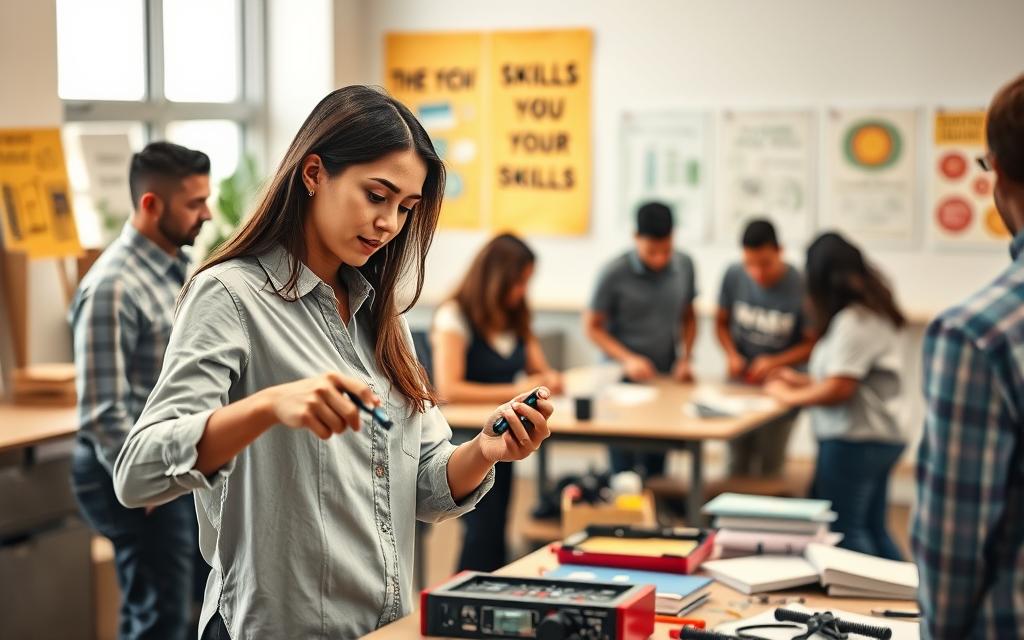
Practical learning helps turn dreams into real skills. By picking tasks that mirror actual work, you can move from theory to practice. This keeps you on a path of steady skill growth and stays motivated.
Effective Strategies for Implementing Practical Learning
Project-based learning sets clear, real-world goals. Choose projects that matter, with actual deliverables. This method fast-tracks skill building through visible results.
Break skills into smaller parts for deliberate practice. Aim for clear goals, seek specific feedback, and gradually increase difficulty. These actions boost both precision and speed.
Combine brief theory lessons with hands-on practice. A quick lecture followed by active practice enhances memory and skill use. This approach deepens your knowledge and mastery.
Write in a learning journal to reflect on successes and areas for improvement. Review your tasks, track your progress, and adjust your efforts as needed. Reflection encourages continuous learning and self-improvement.
Get support from a mentor or a group. Working with experienced people speeds up your learning and provides immediate feedback. This is a great way to learn by doing.
Resources for Hands-On Learning Opportunities
Consider formal options like community colleges, apprenticeships, and university labs. They provide supervised practice and recognized credentials. These are solid sources for hands-on learning.
Take online courses with project work. Platforms like Coursera, edX, Udacity, Skillshare, and LinkedIn Learning offer projects that reflect real-world demands. Pick courses that focus on applying what you learn.
Find local makerspaces, coding bootcamps, and industry gatherings for community learning. Work with nonprofits or small businesses for practical experience. These are flexible ways to learn by doing.
Seek company-sponsored opportunities like internships or on-the-job training. These options blend learning directly with working, enhancing your skills on the go.
To start: identify what skill you need, pick a meaningful project, sign up for a course with real projects, and practice regularly with feedback. These steps make skill improvement both achievable and trackable.
Overcoming Barriers to Practical Learning
Every day, you might face barriers to practical learning. These can include limited money, tight schedules, and local infrastructure gaps. These issues make hands-on learning seem impossible. Yet, a well-thought-out plan can help you overcome these hurdles.
Begin by tackling common misunderstandings about learning through experience. Memorizing stuff might seem quick for exams but it hardly ever teaches you real skills. Instead, practical methods like brief projects, learning from peers, and earning micro-credentials can give you real abilities. And they don’t need a lot of time or money.
You don’t need big labs for hands-on training. Things like cheap simulations, joining forces with community colleges, and apprenticeships give you real practice. Also, things like federal grants, programs funded by employers, and local maker spaces make learning more fair. They help everyone get the same chances, no matter where they live.
For learning opportunities online, embrace digital tools that mimic real tasks. Platforms like Labster and Visible Body offer lifelike simulations. Virtual and augmented reality tools also support practices like surgery, operating equipment, and technical work. This way, you get virtual hands-on experience that also tracks how well you’re doing.
Things like remote internships, virtual hackathons, and online project-based courses let you apply what you learn in real life. You can also show off your skills by contributing to GitHub, creating a portfolio on Figma Communities, and posting projects on LinkedIn. Getting feedback from mentors through video reviews and code critiques also sharpens your skills.
Embrace simple steps to expand interactive learning. Start with mini projects that align with your objectives. Look for free or cheap tools, get microcredentials that test your skills, and ask your school or employer for funding. These actions help you move from theory to practical knowledge.
| Barrier | Low-Cost Solution | How You Benefit |
|---|---|---|
| Limited equipment | Cloud labs, DIY kits, community makerspaces | Hands-on practice without major capital |
| Time constraints | Micro-projects and modular courses | Skill gains in short, focused bursts |
| Resource inequity | Grants, employer apprenticeships, college partnerships | Broader access and credential pathways |
| Geographic limits | Virtual labs, VR training, remote internships | Practical experience from anywhere |
| Unclear validation | Microcredentials, public portfolios, competitions | Verifiable real-world application of skills |
Practical Learning Techniques You Can Use
You want learning methods that are more engaging than just listening to lectures. Practical learning is about doing and testing your knowledge in real scenarios. Here are some simple steps to get started right away.
Project design: Begin with a problem from the real world. Set clear goals, choose challenges from different fields, outline key steps, and tie evaluations to specific skills. To improve practical abilities, work on comprehensive projects like designing a new product, analyzing community problems, service projects, or creating a minimal viable product (MVP).
Assessment options
- Use performance rubrics that show off the skills you aim to master.
- Peer review helps bring in new views and ensures everyone is accountable.
- Give presentations to outsiders to feel real-world pressure.
- Write reports reflecting on what you’ve learned from doing.
Collaborative learning structures
Working in teams, coding together, learning from peers, and working across different subjects enhance teamwork. Learning together makes motivation soar, shares the thinking effort, and sharpens your ability to communicate and solve conflicts.
Facilitation tips
- Switch up roles and responsibilities to keep everyone involved.
- Establish clear rules for meetings and what needs to be done.
- Use online tools like Slack, Trello, Google Workspace, and GitHub to monitor progress and share feedback.
Templates and tools
Offer easy-to-use formats for planning projects, evaluating them, and giving feedback. Build a portfolio that displays your work and tracks your progress over time.
How to implement solo or with peers
- Find group study sessions or coding nights locally to meet coworkers.
- Join open-source projects on GitHub for real tasks.
- Team up with classmates for community projects or analyses to create your portfolio.
- Get feedback from mentors or industry professionals to improve your work.
Project-based learning helps organize your goals and time. Adding collaborative learning brings a deeper understanding. These methods provide the hands-on experience needed to transform ideas into solid skills.
The Role of Technology in Practical Learning
Technology is changing how we learn, combining hands-on experience with advanced tools. You gain skills for the real world in a safe, repeatable way, tracking your growth. This blend of doing and interactive study links classroom learning to real job needs.
Digital Simulations and Their Impact
Digital sims include virtual labs and medical training programs. They also have flight and industrial sims, along with VR and AR. These sims offer controlled settings and quick feedback, which lets you sharpen your skills safely.
Simulations help in healthcare and aviation by improving skills and decisions. They cut training costs and speed up learning when combined with real practice. You can do scenarios over and over until you get them right, making lessons clear and useful.
Online Platforms for Enhanced Practical Experience
Online platforms give projects that help you grow. Sites like Coursera and edX, along with Udacity and Pluralsight, offer projects that add to your portfolio. GitHub and Kaggle focus on coding and data. Behance and Dribbble showcase creative work.
Credly, Coursera, Google, and IBM offer credentials that prove your skills. LinkedIn and GitHub Pages let you show your work to bosses. These platforms take learning further than usual courses do, keeping track of what you’ve accomplished.
To make learning with technology work, mix sims with real tasks and keep an eye on your progress. Balance is key—make sure tools match real tasks, are easy to use, and include help from teachers and classmates. This keeps your learning relevant and fair.
Comparison of Practical Learning and Memorization
When you compare practical learning to memorization, the difference is obvious. Practical learning focuses on applying knowledge and skills that are useful in various jobs. Meanwhile, memorization enables quick recall of facts but doesn’t help much with complex tasks.
Real-World Impact: Why Practical Skills Matter
Companies like Google and Johnson & Johnson look for candidates with hands-on skills. Demonstrating real-world abilities gets you further in the job market than just knowing facts.
How we assess skills is different too. Practical skills are shown off through performance reviews and portfolios. On the other hand, standardized tests just check if you remember facts. This affects your ability to handle new problems.
Learning by doing also makes you more motivated and helps you remember better. Practicing a skill connects actions to results in your brain. This not only helps you remember tasks longer but also encourages ongoing learning.
The Future of Education: Shifting Focus to Practical Learning
The way we learn is changing. The future favors learning that prepares you for real jobs through competency-based programs and apprenticeships. K–12 schools and colleges are now working closely with industries to offer practical learning.
We’ll see more blended learning approaches that combine basic facts with practical application. Lifelong learning will be showcased through portfolios more than grades. This change makes education more relevant to job markets.
Consider both learning methods for your development. While it’s good to memorize key facts, focus on practical learning. It prepares you better for the real world and speeds up your learning.
Building a Community of Practical Learners
Joining an experiential learning community boosts your motivation and introduces you to real-world projects. You get to be part of a group that holds you accountable, offers new ideas, and presents team tasks similar to those in a workplace.
Networking with Like-Minded Individuals
Start networking by looking for industry meetups, events by the American Society for Engineering Education, LinkedIn groups, Reddit subs, local makerspaces, and coding bootcamps. These places offer hands-on experiences with fellow learners and mentors.
Go to events, share your projects, join committees, and help out in group projects. Find mentors and peers to help you grow faster and create a work portfolio.
Sharing Experiences and Best Practices
Make sharing a habit by using case studies, blog posts, GitHub, and portfolios. Communicate through Slack or Discord, Notion and Trello, and shared repositories. This helps spread useful methods within the group.
Hold frequent showcases and review sessions to encourage trying new things, failing, and improving without fear. Folks from different backgrounds enhance group learning and inspire innovative solutions.
| Action | Tools | Benefit |
|---|---|---|
| Host monthly showcases | Zoom, local makerspaces | Visibility, portfolio pieces, referrals |
| Publish case studies | Personal blog, GitHub | Documented experience, credibility |
| Run peer review sessions | Slack, Discord, Notion | Rapid feedback, improved outcomes |
| Contribute to open-source | GitHub, GitLab | Real-world projects, collaborative learning |
| Form mentor cohorts | LinkedIn groups, professional associations | Guidance, career growth |
Conclusion: Embracing Practical Learning
Practical learning offers long-lasting understanding beyond just memorizing facts. It helps you learn skills that are in demand in many jobs. It also boosts your ability to think critically, be creative, and adjust to new situations. Learning by doing helps turn theory into skills you can use at work or show off in a portfolio.
To get started with hands-on learning, you need a plan. First, figure out what you need to learn. Then, choose a small project or practice scenario. Look for a mentor or join a group, like a makerspace or an online community. Use digital tools and the resources around you. Practice a lot, get feedback, and write down what you learn to see your progress and show what you’ve achieved.
Plan short, simple projects and also set bigger learning goals with steps and achievements. If you want to spread the hands-on learning approach, talk about successful examples and share your projects. Offer to organize trials or teach workshops. Showing how to learn in new, cost-effective ways encourages others to try it too.
Keep practicing regularly and adjust your methods as needed. By focusing on practical learning, you’ll make your abilities more useful. Your learning journey will be more fun, and your work will have a bigger impact. Start with easy tasks, track how you’re doing, and gradually take on more complex projects.